
PCSing to San Antonio in 2026: Where to Live Near Lackland, Randolph and Fort Sam Houston

If you’re PCSing to San Antonio, one of the first questions you’ll probably ask is:
Where should we live?
That sounds simple... until you realize Joint Base San Antonio isn’t one base.
JBSA includes several installations spread across a very large city. Living near Lackland is completely different from living near Randolph. A home that makes perfect sense for someone stationed at Fort Sam Houston could give someone working at Lackland a miserable daily commute.
So before you start looking at houses, forget the generic list of “best neighborhoods.”
Start with your assigned duty location.
That one piece of information can completely change where we search, what kind of home you’ll find and how much time you spend sitting in traffic.
If you’re still learning the city, start with my complete Moving to San Antonio Relocation Guide. This article takes a closer look at the decisions military families need to make when relocating to Joint Base San Antonio.
First, Understand How Spread Out San Antonio Is
San Antonio is big.
You can technically live on the opposite side of the city from your assigned installation, but that doesn’t mean you’ll enjoy doing it every day.
Construction, school traffic, accidents and congestion along Loop 1604, Interstate 35, Highway 90 and Interstate 10 can all affect your drive. A commute that looks reasonable on a map at 2:00 in the afternoon may feel very different during morning traffic.
That’s why I don’t recommend choosing an area based only on mileage.
We need to look at:
- Your assigned installation and where you’ll enter the base
- Your normal report time
- How much driving you’re willing to tolerate
- Whether a spouse will be commuting somewhere else
- Your monthly payment target
- Whether you want new construction or an established neighborhood
- How long you expect to remain in San Antonio
You may also be able to get help with on-base and off-base housing options through the official JBSA Housing Office.
Living Near JBSA-Lackland
Lackland is located on the southwest side of San Antonio, near Highway 90 and Loop 410.
For buyers stationed at Lackland, I usually begin by looking at the West and Far West sides of San Antonio. Depending on budget and commute tolerance, that search may include areas around:
- Valley Hi
- Westover Hills
- Heritage
- Arcadia Ridge
- Alamo Ranch
- Northwest Crossing
- Potranco Road
- Highway 90 toward Castroville
The right area depends heavily on what you want from the house.
Closer to Lackland, you may find more established neighborhoods and older homes. As you move farther west, you’ll see more recent construction, newer subdivisions and larger master-planned communities.
The tradeoff is traffic.
Alamo Ranch and the Far West Side have plenty of shopping, restaurants and newer homes, but Loop 1604 and the major roads feeding into it can get busy. A newer house isn’t automatically worth adding a long commute to both ends of your day.
Before making a decision, I recommend checking the drive during the hours you’ll actually be commuting. Better yet, if you’re already in town, drive it yourself before writing an offer.
Living Near JBSA-Randolph
Randolph is northeast of San Antonio near Universal City, Converse, Schertz and Cibolo.
Common starting points for buyers assigned to Randolph include:
- Universal City
- Converse
- Live Oak
- Selma
- Schertz
- Cibolo
- Northeast San Antonio
- Parts of New Braunfels and Seguin
Universal City and Schertz can put you fairly close to Randolph while still giving you access to shopping, restaurants and Interstate 35. Cibolo is also popular with buyers who want newer subdivisions or a little more space, although growth in the area has added traffic to several major roads.
Converse can offer a wide range of price points and both new and resale homes. Farther out, Seguin or New Braunfels may provide additional options, but buyers need to think carefully about the daily drive.
This is where the house can fool you.
You may find a beautiful new home with a great builder incentive farther away from the installation. But if the commute takes away an extra hour of your day, that incentive may not feel quite as exciting six months later.
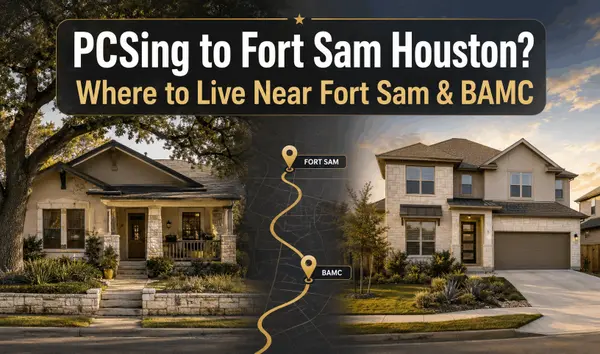
Living Near JBSA-Fort Sam Houston
Fort Sam Houston is much closer to central San Antonio than Lackland or Randolph.
Depending on your housing priorities, the search may include:
- Government Hill
- Mahncke Park
- Terrell Heights
- Northeast San Antonio
- Windcrest
- Converse
- Kirby
- Live Oak
- Parts of downtown and the East Side
Living closer to Fort Sam can give you access to established neighborhoods, older architecture and shorter distances to downtown, the Pearl and other central San Antonio destinations.
The tradeoff is that homes closer to the center of the city may be older, smaller or more expensive than homes farther out. You’ll also want to pay closer attention to the age and condition of the roof, HVAC, plumbing, electrical system and foundation.
Moving farther northeast may give you more house for the money or access to newer construction, but it can also increase the commute.
Again, there isn’t one correct answer.
Some buyers would rather have a smaller house and spend less time driving. Others need more bedrooms, a bigger yard or a certain monthly payment and are willing to live farther out.
My job is to help you see the full tradeoff before you commit.
Should You Buy or Rent During Your PCS?
Buying isn’t automatically the right move just because you’re eligible for a VA loan.
It usually comes down to your timeline, finances and future plans.
Buying may make sense if:
- You expect to remain in San Antonio for several years
- The payment fits comfortably within your budget
- You have money set aside for inspections, moving and home maintenance
- You’re comfortable keeping the home as a rental if you receive new orders
- The property should be reasonably marketable when it’s time to sell
Renting may make more sense if:
- Your assignment could be short
- You don’t know the city yet
- You need time to improve credit or reduce debt
- You’re unsure which installation or work location will become permanent
- Buying would leave you with little or no emergency savings
There’s no prize for buying before you’re ready.
Sometimes the smart move is renting for six months or a year, learning the city and then buying with more confidence.
Using a VA Loan in San Antonio
A VA loan can be a powerful benefit, but it’s important to understand what it does and doesn’t do.
Eligible borrowers may be able to purchase without a down payment, subject to lender approval and the borrower’s remaining entitlement. VA financing also doesn’t require traditional monthly private mortgage insurance.
But zero down does not mean zero dollars needed.
You may still need money for:
- Earnest money
- Option money
- Inspections
- Appraisal-related expenses
- Closing costs not covered by the seller
- Moving expenses
- Immediate repairs or purchases after closing
VA-guaranteed purchase loans are intended for homes that will be occupied by the veteran, service member or, in certain active-duty situations, the spouse or dependent. You’ll also need a valid Certificate of Eligibility and must meet the lender’s income and credit requirements. You can review the basic program directly through the VA Home Loan Program.
Seller concessions, lender credits and builder incentives may reduce how much cash you need at closing, but they should be evaluated as part of the complete offer.
A large incentive doesn’t automatically make something a good deal.
Texas Property Taxes Can Change the Payment
Military buyers coming from another state are sometimes surprised by Texas property taxes.
Texas doesn’t have a state individual income tax, but property taxes can have a major effect on your monthly housing payment. Two homes with the same price and interest rate can have very different payments because of the tax rate.
This matters especially with new construction.
If a newly built home has only been assessed based on the land or an incomplete structure, the current tax bill may not reflect what you’ll owe once the finished home is fully assessed.
Before buying, we need to look at:
- The estimated completed value
- The total tax rate
- Whether the home is inside a special taxing district
- The homestead exemption
- Any disabled-veteran exemption you may qualify for
- How the lender calculated the escrow payment
Texas provides several property-tax exemptions for qualifying disabled veterans, including a residence-homestead exemption for certain veterans rated 100 percent disabled or compensated at the 100 percent rate due to individual unemployability. Eligibility depends on the specific facts, and the exemption generally requires an application through the local appraisal district. The Texas Comptroller’s property-tax information is the best place to verify the current rules.
I also explain the payment side in more detail in my San Antonio Property Taxes Guide.
New Construction Can Work Well for a PCS, but Be Careful
San Antonio has a lot of new construction, especially around the Far West Side, Converse, Cibolo, Schertz, Seguin and the communities outside the city.
Builders may offer:
- Interest-rate incentives
- Closing-cost assistance
- Price reductions
- Appliance packages
- Quick move-in homes
- Flexible closing timelines
Those incentives can help, especially when you’re already paying for a move.
But you still need to compare the complete deal.
That includes the home price, rate, tax rate, HOA, special district taxes, commute, lot size and future resale competition. You should also have your own inspection, even if the home is brand new.
And remember, the builder’s salesperson represents the builder.
If you want your own Realtor involved, contact me before you register at the model home or begin working directly with the builder.
You can compare the advantages and disadvantages in my guide to New Construction vs. Resale Homes in San Antonio.
Can You Buy a San Antonio Home Before You Arrive?
Yes. I’ve helped buyers work through much of the process remotely.
That can include:
- Video tours
- Live neighborhood drive-throughs
- Reviewing seller disclosures electronically
- Digital signatures
- Coordinating inspections
- Attending the inspection by video
- Working with your lender and title company
- Arranging a remote or mobile closing when available
Technology makes remote buying possible.
It doesn’t mean you should rush.
Photos can make rooms look bigger. Listing descriptions leave things out. Maps don’t show how a street feels during rush hour. A video tour needs to show the house honestly, including the worn carpet, strange layout, busy road or neighbor’s roof that didn’t make it into the listing photos.
I’d rather show you the problem now than have you discover it while unloading the moving truck.
What to Send Me Before We Start Looking
If you’re preparing for a PCS to San Antonio, send me:
- Your assigned installation
- Your report-no-later-than date
- Your expected arrival date
- Your desired monthly payment
- Your maximum comfortable commute
- The number of bedrooms and bathrooms you need
- Whether you’re considering buying, renting or both
- Whether you want new construction, resale or either
- Any pets, accessibility needs or other major housing priorities
From there, I can help narrow the search into areas that actually fit your situation.
Not someone else’s list.
Not a builder’s ad.
Your orders, your payment and your priorities.
Planning a PCS to San Antonio?
I’m Steven Hernandez, a San Antonio Realtor and Military Relocation Professional. I help military families and veterans compare areas, understand VA financing, evaluate new construction and make sense of the numbers before choosing a home.
If you’re moving to Lackland, Randolph or Fort Sam Houston, call or text me at 210-861-6686.
You don’t need to know exactly where you want to live yet.
That’s what we’ll figure out together.
Categories
Recent Posts







“My job is to find and attract mastery-based agents to the office, protect the culture, and make sure everyone is happy! ”